 NKS Partner
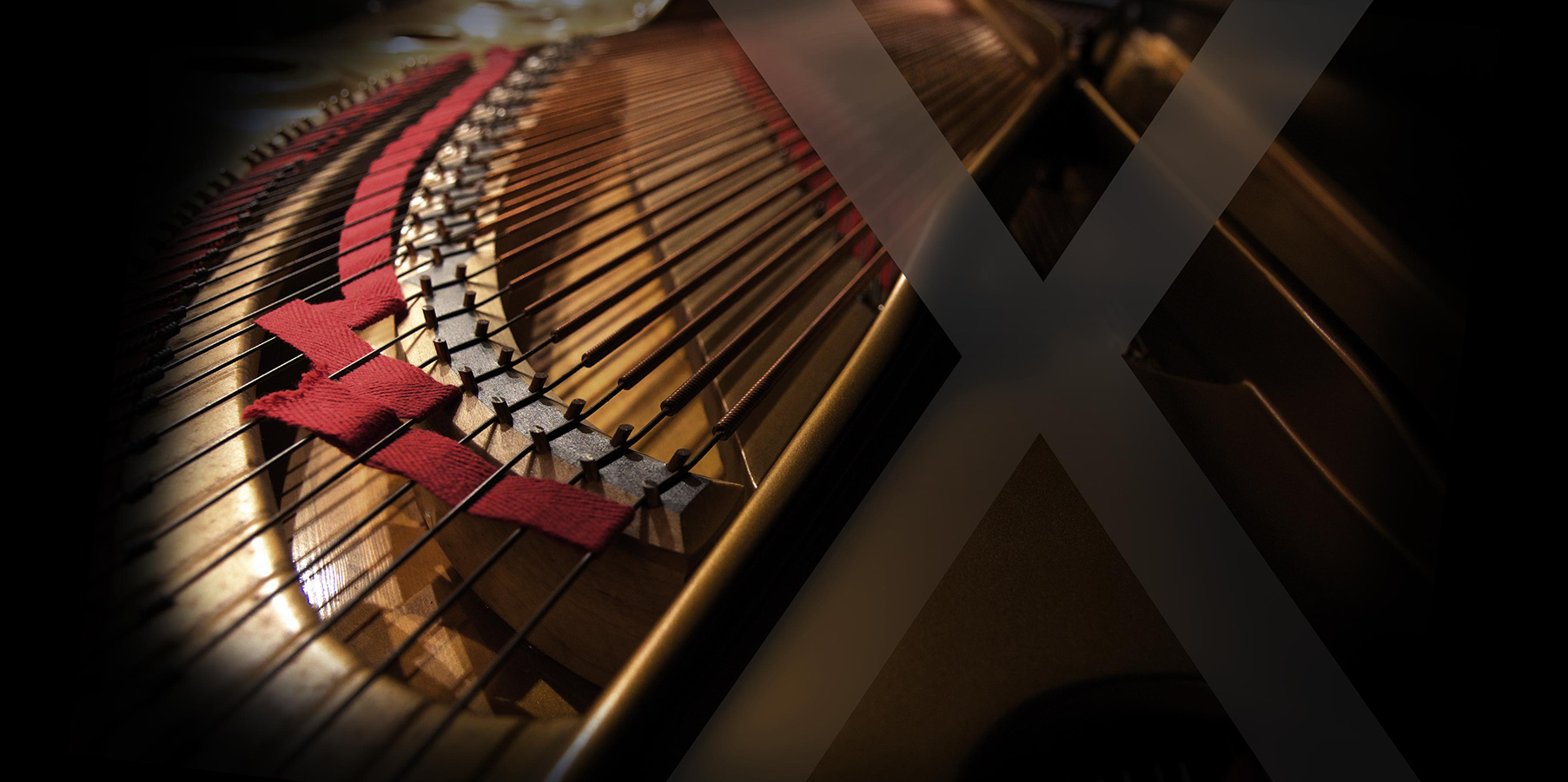
XTENDED PIANO
A SONIC EXPLORATION OF THE GRAND PIANO
- 5 PIANO INSTRUMENTS
- 6 GB Sample Library
- Kontakt Player NKS
Extended Techniques | Extended Textures
Curtis Curtis-Smith and Stephen Scott have both developed piano works in which the performers bow the strings of the piano using specially designed bows. Our bowed piano includes three articulations, two made with very long bows which are sustained (and the samples are looped), and also a short bow made from a tongue depressor and horsehair, which produces a short staccato sound.
Notably originated by George Crumb, Mute piano is a technique in which you lightly touch the finger at a nodal point on the piano string and play the key to produce a harmonic; Crumb generally used the 3rd harmonic, so it sounds a 12th above the fundamental (an octave plus a fifth). It is one of the few easily produced harmonics which the performer can actually reach while still being able to play the keys, and so this is what we used for the Xtended Piano instrument.
Henry Cowell first presented a technique (among others) in which the piano notes are plucked, either with the fingers or a plectrum of some sort. We used a guitar pick and recorded plucked notes with both the piano dampers down and up.
A piano has mallets itself (made of hard felt), but you can also hit the strings with foreign mallets to produce a different timbre. For this collection we recorded hitting the strings with a wooden mallet, and with a marimba mallet. The wooden mallet has a timbre reminiscent reminiscent of honky-tonk or "thumb tack" pianos, like those used in ragtime during the 20's (or Nancarrow's player piano).
The classic freestyle technique of simply reaching inside and scraping the strings, knocking the frame, strumming across the strings - all producing a huge soundscape drenched in piano resonance.
THE KONTAKT INSTRUMENT



ELECTRONIC MUSICIAN
" For me, the real charm of Xtended Piano lies in the five basic instruments, which, combined in a Kontakt multi, provide a fascinating composition environment"

KONTAKT PLAYER COMPATIBLE
This is a Kontakt Player instrument. This means that you do not need to own the full version of NI Kontakt to use it. It will run as a plug-in instrument in any VST/AU/RTAS/AAX/WASAPI,compatible host program or DAW eg: Cubase, Logic, Ableton Live, DP, Reaper, Pro-Tools. No extra purchase necessary.
System Requirements:
Windows 7 or higher (latest Service Pack, 32/64 Bit), Intel Core Duo or AMD AthlonTM 64 X2, 4 GB RAM (6 GB RAM recommended)
Mac: OS X 10.9 or higher, Intel Core 2 Duo, 4 GB RAM
Requires KONTAKT 5 or KONTAKT 5 PLAYER version 5.5 or later
Related Products
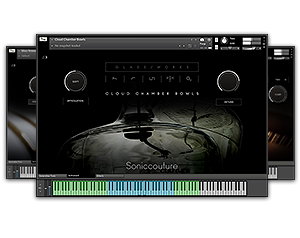
Glass Works
A collection of instruments made from glass:
Cristal Baschet | Glass Armonica | Cloud Chamber Bowls.
Glass Works
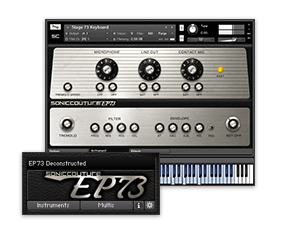
EP73 Deconstructed
A sonic exploration of the tines and mechanisms of a vintage Rhdoes Mk.1 Stage 73 electric piano.
EP73 Deconstructed
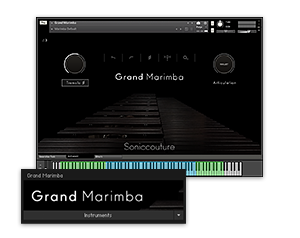
Grand Marimba
The ultimate solo marimba :
A 5 octave Yamaha 6100, sampled in forensic detail.
Grand Marimba

Hammersmith Pro
Model D Grand Piano.
21 velocity layers & True Sustain
Hammersmith Pro
Box Of Tricks
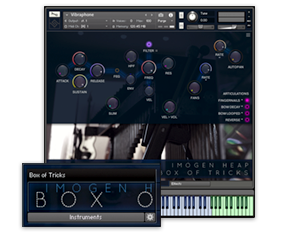
A collection of 13 instruments designed in collaboration with Imogen Heap.